Naramata Real Estate: A Deep Dive Into BC's Most Enchanting Wine Country Community
Neighbourhoods Chimes Group June 4, 2026
Neighbourhoods Chimes Group June 4, 2026
Naramata Real Estate: A Deep Dive Into BC's Most Enchanting Wine Country Community
If Kitsilano is Vancouver's established coastal ideal and Mount Pleasant its urban reinvention story, Naramata is something altogether different — one of British Columbia's most quietly extraordinary places to own property, and one that most Vancouverites don't discover until someone who loves it takes them there for the first time. For Ben Chimes, founder of the Chimes Real Estate Group, that love is personal. Ben has owned property in Naramata for years, operates a winery on the Bench, and returns as often as life allows — not as a visitor passing through, but as someone who has genuinely made the place part of who he is. When he brings Vancouver clients up to see it for the first time, the reaction is almost always the same: quiet disbelief that somewhere this beautiful, this alive, and this special exists just a four-hour drive from the city.
For buyers considering Naramata, the opportunity is real and the window to act wisely is narrowing — this is a market defined by scarcity, and the properties that come available here rarely stay available for long. For sellers, understanding what makes Naramata genuinely irreplaceable — and how to speak to the buyers who feel that pull — is essential to achieving the best possible outcome. This guide covers everything serious buyers and sellers need to know about Naramata real estate: its history, its character, the property types that define it, and what the market looks like right now.
What Makes Naramata Different From Anywhere Else in BC?
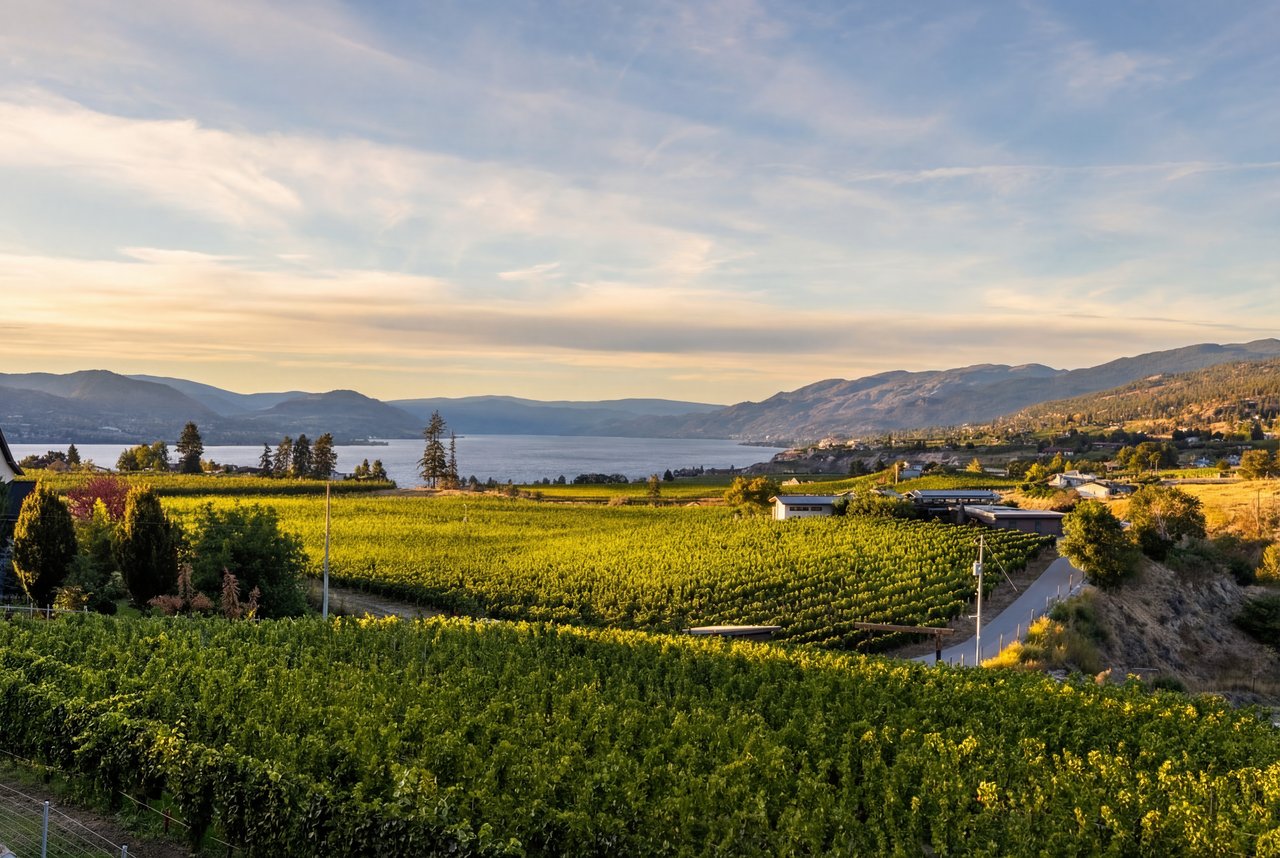
Naramata sits on the eastern shore of Okanagan Lake, tucked between the water and the dramatic, sun-exposed hillside known as the Naramata Bench — a narrow strip of some of the most prized agricultural land in Canada. The village itself is small, unhurried, and deeply rooted in a way that is increasingly rare. There are no big box stores, no chain restaurants, no manufactured sense of place. What there is instead is a concentration of independently owned wineries, cideries, orchards, and farms, a community that has known itself for a long time, and a physical setting — lake on one side, vineyard-covered hills on the other, sun almost every day from May through October — that is simply difficult to argue with.
What Ben brings his Vancouver clients to understand is something that doesn't translate in photographs: the pace of Naramata is different. The mornings are slower. The evenings last longer. The social fabric — built around harvest seasons, winery dinners, long afternoons on the lake — is genuinely warm in a way that resort towns, however beautiful, rarely achieve. People who buy here don't just buy a property. They buy into a way of spending time that most of them didn't know they were missing.
A Brief History of Naramata
Naramata's story begins long before its wineries made it famous. The area has been home to the Syilx Okanagan people for thousands of years, who have always understood the unique richness of this land. European settlers arrived in the late 1800s, drawn by the same qualities that attract buyers today — the extraordinary growing conditions, the lake access, and the sheltered warmth of the Bench. The village itself was formally established in the early 1900s, founded by John Moore Robinson, who envisioned it as a resort destination and gave it a name derived from an Indigenous word meaning "smile of the manitou" — a fitting description for a place that has always seemed to operate under its own particular grace.
For much of the 20th century, Naramata was orchard country — apples, pears, and stone fruits grown by farming families who had worked the same land for generations. The transformation to wine country began in earnest in the 1990s, when pioneering vintners recognized that the Bench's combination of glacial soils, south-facing exposure, and warm days tempered by cool nights was ideally suited to producing world-class wine. What followed was one of the quiet success stories of Canadian agriculture: a community that reinvented its economy around quality, craft, and a product that brought the world to its doorstep without asking the place to become something it wasn't.
The Naramata Bench: Wine Country Living at Its Finest
The Naramata Bench is now home to over 40 boutique wineries and cideries, many of them operating out of estates that are themselves architectural and agricultural achievements. Names like Laughing Stock, La Frenz, Therapy Vineyards, and Poplar Grove have earned international recognition, and the Bench as a whole has established itself as one of Canada's premier wine regions — comparable in quality and character to destinations in Burgundy, Tuscany, and the Willamette Valley, at a fraction of the notoriety and with all of the accessibility.
What Naramata Has to Offer
Beyond the wineries, Naramata delivers a quality of life that is genuinely difficult to replicate. The lake is the centre of summer — swimming, paddleboarding, boating, and long afternoons on private docks define the season for residents in a way that no amount of urban amenity can substitute for. The Kettle Valley Railway trail, which winds through the hills above the Bench, offers some of the finest cycling in British Columbia, drawing riders from across the country and beyond. Hiking, kayaking, and orchard picking fill the calendar for those who want activity, while winery lunches, farm dinners, and quiet evenings on the porch define the pace for those who simply want to stop.
The village core — anchored by the Naramata Heritage Inn, the local general store, and a small collection of independent businesses — has the unhurried character of a community that has never needed to perform. There are no tourist traps here, no manufactured charm. What the village offers is authenticity: the kind of place where you recognize faces quickly and where belonging comes naturally.
Property Types and What Buyers Should Know
Vineyard Estates and Agricultural Properties
The most sought-after properties on the Naramata Bench are the vineyard estates — parcels of agricultural land with established vines, often including principal residences and secondary structures, that offer the full wine country lifestyle. These properties are genuinely rare. The Bench is finite, the land is productive, and owners rarely sell until circumstances compel them to. When vineyard estates come to market, they attract serious buyers quickly, and the due diligence required — on water rights, agricultural land reserve designations, vine health, and winery licensing — demands an advisor who knows the territory. Ben's firsthand experience as a winery owner on the Bench makes the Chimes Real Estate Group uniquely qualified to guide buyers through this process.
Vineyard estate pricing varies significantly depending on acreage, vine age and variety, water rights, and the quality of improvements. Well-positioned estate properties on the Bench have transacted in the $3 million to $8 million range, with exceptional properties exceeding that.
Lakefront Properties
Naramata's lakefront properties represent some of the most coveted real estate in the entire Okanagan. Direct Okanagan Lake access — with private docks, south-facing exposure, and views that encompass the full sweep of the lake and the mountains beyond — commands a premium that is fully justified by the scarcity of supply and the intensity of demand. Lakefront homes in Naramata range from heritage character cottages that have been in families for generations to architecturally ambitious contemporary builds designed to take full advantage of the setting. Pricing typically begins in the $3 million range for entry-level lakefront positions and climbs well beyond that for the finest properties.
Village and Bench Homes
For buyers seeking the Naramata lifestyle without the scale of a vineyard estate or the premium of direct lakefront, the village and Bench offer a range of residential properties — from character homes on the quiet streets of the village core to newer builds with lake and vineyard views on the hillside above. These properties represent the most accessible entry point to Naramata ownership, with pricing beginning in the $900,000 to $1.5 million range for well-positioned homes, and rising depending on views, lot size, and finish quality.
The Vancouver Connection: Why So Many Buyers Come From the City
The majority of buyers Ben works with in Naramata come from Vancouver. The reasons are consistent: the drive is manageable, the contrast with city life is total, and the value proposition — what your money buys in Naramata compared to what it buys in Vancouver — is startling in the best possible way. A budget that purchases a one-bedroom condominium in Kitsilano can buy a character home with vineyard views and lake glimpses in Naramata. A West Side detached home budget can reach an estate property with acreage, vines, and a private dock.
For Vancouver buyers who have spent years building equity in the city's residential market, Naramata represents an opportunity to deploy that equity into a property that delivers not just financial return but a profound improvement in how they spend their time. Ben's practice of personally introducing clients to the community — taking them to the wineries he knows, the trails he rides, the restaurants where the owners know his name — transforms what might otherwise be a transactional real estate decision into something more meaningful: a genuine understanding of what life here actually looks and feels like.
The Investment Case for Naramata Real Estate
The investment thesis for Naramata is straightforward and compelling. Supply is structurally constrained — the Bench is finite, the Agricultural Land Reserve limits development, and lakefront is irreplaceable. Demand is growing as the Okanagan's profile as a lifestyle and wine destination continues to rise nationally and internationally. And the buyer pool is deep, drawn from Vancouver, Calgary, Toronto, and increasingly from international markets that have discovered what the region offers.
What Naramata adds beyond the standard Okanagan investment case is rarity. This is not a large resort town with hundreds of comparable properties. It is a small, specific community where the finest properties are genuinely one-of-a-kind, and where the combination of agricultural heritage, wine culture, lake access, and village authenticity cannot be manufactured or replicated. Buyers who understand what they are acquiring — and who acquire it thoughtfully — have historically been rewarded.
Working With the Right Advisor in Naramata
Naramata is a market that rewards local knowledge and genuine connection. Understanding water rights, ALR regulations, winery licensing, and the nuanced differences between a well-positioned Bench property and one that sounds similar but performs differently — these are not things that can be learned from a listing sheet. They require experience that comes from being present in the community, understanding its rhythms, and caring about its future.
Ben Chimes brings all of that to every transaction he facilitates in Naramata. As a property owner, and regular presence in the community, he is not parachuting in to serve a client — he is sharing a place he loves with people he believes will love it too. That is a different kind of real estate service, and buyers who have experienced it consistently describe it as the reason they came back to Chimes for every transaction that followed.
The Chimes Real Estate Group has been active across Vancouver's residential market for over two decades, with more than 1,500 properties sold and over $2 billion in career sales. Our Naramata practice brings the same standard of expertise and care to wine country that we have always brought to the city.
If you are considering buying or selling in Naramata, we would welcome the opportunity to share what we know. There is no obligation — just an honest, informed conversation about what the market looks like and what the right move might be for you.
Frequently Asked Questions About Naramata Real Estate
What types of properties are available in Naramata? Naramata offers vineyard estates, lakefront homes, village character homes, and Bench properties with lake and vineyard views. Supply across all categories is limited, and the finest properties rarely remain available for long.
How far is Naramata from Vancouver? Naramata is approximately a four-hour drive from Vancouver, making it accessible as a weekend destination and realistic as a part-time or full-time residence for buyers who work remotely or split their time between city and country.
Is Naramata part of the Agricultural Land Reserve? Much of the Bench is within the ALR, which restricts subdivision and non-agricultural development. This is one of the key factors that limits supply and supports long-term value. Buyers should work with an advisor who understands ALR regulations and their implications for any specific property.
What is the Naramata Bench? The Naramata Bench is the hillside above Naramata village, facing southwest over Okanagan Lake, that is home to over 40 wineries and cideries. It is one of Canada's premier wine-producing regions and the address that defines Naramata's identity and appeal.
Can I own a winery in Naramata? Yes, and for the right buyer it is one of the most extraordinary things you can do with a real estate purchase. Ben Chimes has direct experience operating a winery on the Bench and can provide guidance that goes well beyond what a standard real estate transaction involves.
Who should I contact to buy or sell in Naramata? The Chimes Real Estate Group, and specifically Ben Chimes, whose personal connection to the community is unmatched among Vancouver-based real estate advisors. Contact us to start the conversation.
Stay up to date on the latest real estate trends.
Neighbourhoods
Selling
Neighbourhoods
Neighbourhoods
Neighbourhoods
Neighbourhoods
Neighbourhoods
Neighbourhoods
Home Preperation
From deep cleaning and decluttering to landscaping and last-minute touches — everything you need to do before your listing goes live this spring.
A refined, personal approach that delivers clarity and confidence at every step.