Shaughnessy Real Estate: A Complete Guide to Vancouver's Most Storied Luxury Neighbourhood
Neighbourhoods Chimes Group April 9, 2026
Neighbourhoods Chimes Group April 9, 2026
If Point Grey is defined by its relationship to the natural landscape, and Kitsilano by its energy and walkability, Shaughnessy is defined by something altogether different — a sense of occasion. It is Vancouver's most architecturally significant neighbourhood, home to some of the grandest estates in Western Canada, and a place where the history of the city is written in the fabric of the streets themselves. For buyers considering Shaughnessy, and for sellers seeking to understand what makes their property exceptional, what follows is everything you need to know.
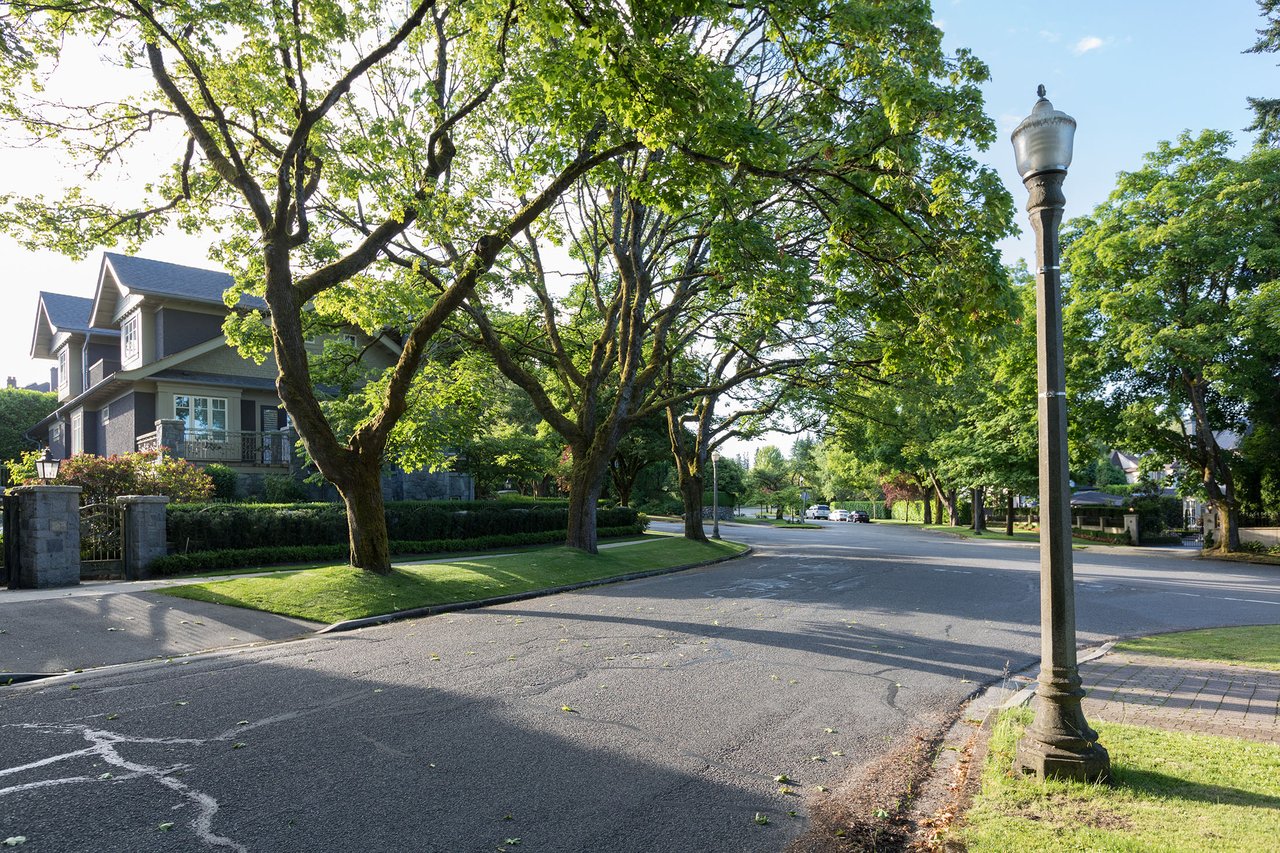
Shaughnessy was not a neighbourhood that grew organically over time. It was conceived and built with intention. In the early 1900s, the Canadian Pacific Railway developed the area as an exclusive residential enclave — wide, curving streets, deep setbacks, mature trees, and large lots were all part of a deliberate design to create something that would stand apart from the rest of the city. More than a century later, that original vision remains strikingly intact.
The result is a neighbourhood that feels genuinely different the moment you enter it. The streets curve rather than grid. The trees are enormous and old. The homes sit back from the road behind hedges and gardens. The scale is generous in a way that Vancouver's newer neighbourhoods simply cannot replicate. Shaughnessy does not feel like a suburb, and it does not feel like a typical urban neighbourhood. It occupies its own category — and that singularity is precisely what drives its enduring appeal.
Shaughnessy is also divided into three distinct sub-areas — First Shaughnessy, Second Shaughnessy, and Third Shaughnessy — each with its own character, price point, and set of considerations. Understanding those distinctions is essential for anyone serious about this market.
First Shaughnessy is the original CPR development — the innermost and most prestigious tier of the neighbourhood. The homes here are among the largest and most architecturally significant in all of Vancouver. Tudor Revival, Georgian, Craftsman, and Colonial Revival estates sit on lots that are frequently half an acre or more, surrounded by mature gardens, circular driveways, and the kind of landscaping that takes generations to develop.
The City of Vancouver has designated First Shaughnessy as a Heritage Conservation Area, which means that any significant changes to properties — including demolition and new construction — require approval from the Shaughnessy Heights Building Restriction Act and the city's heritage planning department. This regulatory framework is both a constraint and a protection. It means that the character of First Shaughnessy is preserved by law, and that the neighbourhood will not be gradually eroded by out-of-scale new development. For buyers who are purchasing in part because of what First Shaughnessy is, that protection has real value.
Prices in First Shaughnessy reflect the rarity and significance of what is being offered. Properties here typically begin at $5 million and extend well beyond $20 million for the finest estates in the best condition on the most coveted streets. The buyer pool at this level is genuinely global — First Shaughnessy properties attract interest from across Canada, from Asia, from Europe, and from buyers evaluating multiple world cities simultaneously.
The Streets That Matter Most The Crescent — a signature feature of the original CPR plan — is among the most prestigious addresses in the neighbourhood. The curved streets of The Crescent, along with Angus Drive, Nanton Avenue, McRae Avenue, and Wolfe Avenue, represent the heart of First Shaughnessy. Properties on these streets, particularly those that have been carefully maintained or sensitively restored, are among the most sought after in the city.
Second Shaughnessy — roughly the area between West 16th Avenue to the north and King Edward Avenue to the south — shares much of the character of First Shaughnessy while offering a somewhat more accessible entry point into the market. Lots remain generous, trees remain mature, and the architectural quality remains high, but the heritage restrictions are less stringent and the price range is broader.
This is where many serious West Side buyers find their Shaughnessy opportunity. A fully renovated estate in Second Shaughnessy — with a modern interior that respects the character of the original architecture — can represent exceptional value relative to comparable properties in First Shaughnessy. The lifestyle on offer is virtually identical. The address carries the same prestige in most contexts. And the flexibility to renovate or rebuild to a high standard without navigating the full weight of First Shaughnessy's heritage overlay is meaningful for buyers who want to put their own mark on a property.
Prices in Second Shaughnessy typically range from approximately $3.5 million for older homes requiring significant investment to $8 million or more for fully renovated, move-in-ready estates on premium lots.
Third Shaughnessy extends south of King Edward Avenue toward West 33rd Avenue and shares the neighbourhood's DNA — curving streets, mature trees, larger lots — while offering the most accessible price points in the Shaughnessy market. This is where buyers who aspire to the Shaughnessy lifestyle can often find their entry point, and where savvy investors have historically identified significant value.
Homes in Third Shaughnessy range widely in condition and style. Older homes on large lots that have not been updated for years can offer genuine opportunity for buyers willing to invest in renovation. More recently renovated properties offer the full Shaughnessy experience at a price point that compares favourably with equivalent properties elsewhere on the West Side.
Shaughnessy's architectural heritage is not merely aesthetic — it has direct implications for how properties are bought, sold, renovated, and valued. Understanding the heritage framework is essential for anyone engaging with this market.
The Vancouver Heritage Register includes a significant number of Shaughnessy properties, and those designations carry varying levels of protection and incentive. Fully designated heritage homes may qualify for the City of Vancouver's heritage density transfer program, which can allow owners to transfer unused density to other sites — a mechanism that has real financial value in the right circumstances. They may also qualify for property tax benefits and grants for restoration work.
The trade-off is that alterations to designated properties require heritage approval, and the scope of what is permitted can be more limited than buyers accustomed to unrestricted renovation might expect. Working with professionals — architects, heritage consultants, and contractors — who have direct experience with Shaughnessy's heritage framework is strongly advisable.
For sellers, the heritage status of a property is a marketing asset as much as a regulatory consideration. The buyers who are drawn to First Shaughnessy in particular are often specifically seeking the architectural character that heritage designation protects. Presenting a heritage home well — with accurate historical context, quality photography that captures the character of the architecture, and a narrative that connects the property to the broader story of the neighbourhood — is a meaningful part of achieving the best outcome.
Shaughnessy's large lots are one of its defining characteristics, and for certain buyers they represent significant long-term value beyond the existing structures. Understanding the development potential of a Shaughnessy lot requires careful attention to zoning, heritage overlay, and the city's evolving approach to residential density.
In First Shaughnessy, the Heritage Conservation Area designation significantly limits the redevelopment options available to property owners. Demolition of existing structures is generally not permitted without heritage review, and new construction must be compatible with the character of the area. For buyers purchasing in First Shaughnessy, the existing home is almost always the asset — not the land beneath it.
In Second and Third Shaughnessy, the picture is more varied. Some larger lots offer genuine subdivision potential or the opportunity to build a new home to a high specification. Others carry their own informal heritage character that makes retention and restoration the most compelling path. Each property needs to be evaluated individually, with qualified input from architects and land use consultants who understand the specific site.
Shaughnessy has historically attracted a particular kind of buyer — established Vancouver families, business leaders, diplomats, and senior professionals who valued the neighbourhood's prestige, privacy, and permanence. That profile remains, but it has broadened significantly over the past two decades.
International buyers, particularly from mainland China, Hong Kong, and Taiwan, have been a meaningful presence in the Shaughnessy market for many years. The neighbourhood's combination of large lots, architectural grandeur, prestigious address, and proximity to excellent schools aligns well with the priorities of affluent Asian buyers who are evaluating Vancouver as a long-term home or as part of a diversified real estate portfolio. The presence of strong Mandarin and Cantonese-speaking communities across the West Side adds to the neighbourhood's appeal for buyers from the Pacific Rim.
A newer buyer profile has also emerged in recent years — younger high-net-worth buyers, often in technology, finance, or entrepreneurship, who are drawn to the idea of a grand heritage home but want the interior to reflect contemporary living. These buyers are often looking for properties that have already been thoughtfully updated, or for homes with the bones and the lot size to support a significant renovation program. This buyer profile has added energy and investment to the market and has contributed to some of the most impressive renovation projects the neighbourhood has seen in a generation.
Shaughnessy's school catchment is one of the strongest on the West Side. Shaughnessy Elementary has an excellent reputation at the primary level. For secondary, students typically feed into Eric Hamber Secondary, which is well-regarded academically and carries strong arts and athletics programs.
The neighbourhood's location makes it exceptionally well-positioned for access to West Side private schools. Crofton House School, one of Vancouver's leading independent girls' schools, is located directly in Shaughnessy. Little Flower Academy and York House School are nearby. St. George's School — the city's leading independent boys' school — is a short drive away in the University Hill area. For families who prioritize private education, Shaughnessy offers proximity to virtually every significant independent school on the West Side.
Shaughnessy is, at its core, a neighbourhood built around the private domain. The grandeur is inward-facing — the large gardens, the generous interior spaces, the privacy afforded by deep lots and mature hedging. It is a neighbourhood for people who entertain at home, who value the ability to have space for extended family, and who find meaning in the stewardship of a significant property.
That said, Shaughnessy is not isolated. It sits at the geographic heart of the West Side, with easy access to South Granville's galleries, antique dealers, and restaurants to the east; Kerrisdale's village atmosphere to the southwest; and the broader amenities of the West Side throughout. Shaughnessy Park offers green space within the neighbourhood itself. The Douglas Park community centre is nearby for families with active children.
For buyers coming from other world cities — London, Hong Kong, Sydney, New York — Shaughnessy often provides a point of reference. It has the character of the great garden suburbs of those cities: Wimbledon, Repulse Bay, Mosman, Bronxville. That legibility to an international buyer is not incidental — it is part of why Shaughnessy maintains its position at the top of Vancouver's residential market.
Underestimating the cost of maintenance and renovation on heritage homes. Large, older homes require ongoing investment to maintain properly. Buyers who purchase in Shaughnessy without a realistic budget for maintenance, mechanical upgrades, and eventual renovation can find themselves in a difficult position. Understanding the true cost of ownership — not just the purchase price — is essential.
Misreading the heritage designation status. Not all Shaughnessy homes carry the same level of heritage protection, and buyers sometimes make assumptions based on a home's appearance rather than its actual designation status. The implications for what can and cannot be done with a property vary significantly depending on designation level, and buyers should verify this carefully before proceeding.
Overlooking lot dimensions and setback requirements. Shaughnessy's zoning includes specific setback, height, and coverage requirements that affect what can be built or added to a property. Buyers with renovation or development plans should have those plans reviewed by an architect or planner before conditions are removed.
Failing to account for the buyer pool. At the price points that First and Second Shaughnessy command, the universe of qualified buyers is smaller than in more accessible markets. Sellers who price aggressively without the right marketing reach and presentation may find their property sitting. The quality of the listing strategy — photography, narrative, international marketing, and the showing experience — matters enormously in this segment.
Shaughnessy demands a level of expertise that goes well beyond general West Side market knowledge. The heritage framework, the architectural context, the international buyer profile, the specific streets and lots that command premiums — all of this requires an agent who has spent years working in this specific neighbourhood and who understands what drives value at the top end of Vancouver's market.
The Chimes Real Estate Group brings over two decades of experience across Vancouver's West Side luxury market, including significant activity in Shaughnessy at all three tiers of the neighbourhood. We understand how to position a heritage estate for the buyers who will value it most — locally and internationally. We know how to navigate the heritage overlay and how to advise buyers on the due diligence that matters. And we bring the calm confidence and strategic approach that complex, high-value transactions require.
If you are considering buying or selling in Shaughnessy, we would welcome a conversation. The right guidance at the beginning of the process makes an enormous difference to the outcome at the end of it.
What is the average price of a home in Shaughnessy? Prices vary significantly by tier. First Shaughnessy typically begins around $5 million and extends well beyond $20 million for the finest estates. Second Shaughnessy ranges from approximately $3.5 million to $8 million. Third Shaughnessy offers more accessible entry points, generally from the mid-$2 millions upward.
Can you demolish and rebuild in Shaughnessy? In First Shaughnessy, demolition is heavily restricted by the Heritage Conservation Area designation. In Second and Third Shaughnessy, options are more flexible but still subject to zoning and, in some cases, heritage considerations. Each property needs to be assessed individually.
What architectural styles are common in Shaughnessy? Shaughnessy is home to an exceptional range of early 20th-century residential architecture — Tudor Revival, Georgian Colonial, Craftsman, Spanish Colonial Revival, and Arts and Crafts are among the most common styles. The neighbourhood also has a number of significant mid-century modern homes.
Is Shaughnessy good for families? Shaughnessy is an excellent family neighbourhood. Strong public school catchments, proximity to the West Side's leading private schools, generous lot sizes, quiet streets, and a safe and established community make it a natural destination for families at the luxury end of the market.
How does Shaughnessy compare to Point Grey? Both are premier West Side neighbourhoods, but they offer different experiences. Point Grey is defined by its connection to the waterfront, UBC, and Pacific Spirit Park — it has a more outdoorsy, academic character. Shaughnessy is defined by architectural grandeur, larger estates, and a more formal sense of occasion. Buyers often consider both, and the right choice comes down to lifestyle priorities and what kind of home resonates most.
Who should I contact to buy or sell in Shaughnessy? The Chimes Real Estate Group specializes in Vancouver's West Side luxury market, with deep expertise in Shaughnessy across all three tiers. Contact us to start the conversation.
The Chimes Real Estate Group — Vancouver's West Side Real Estate Specialists. Contact us to start the conversation.
Stay up to date on the latest real estate trends.
Neighbourhoods
Selling
Neighbourhoods
Neighbourhoods
Neighbourhoods
Neighbourhoods
Neighbourhoods
Neighbourhoods
Home Preperation
From deep cleaning and decluttering to landscaping and last-minute touches — everything you need to do before your listing goes live this spring.
A refined, personal approach that delivers clarity and confidence at every step.